Love Rose Embroidery: A Designer’s Review
As an embroidery designer who has spent years helping small businesses translate their brand identity into thread, I approach every new machine embroidery design with a critical eye. It is not just about whether a motif looks pretty on a screen; it is about how it performs under the needle, how it wears over time, and how it elevates the perceived value of the finished product. Recently, I evaluated Love Rose Embroidery, a design marketed for Valentine’s Day sewing projects, to determine its viability for commercial use beyond seasonal decorations.
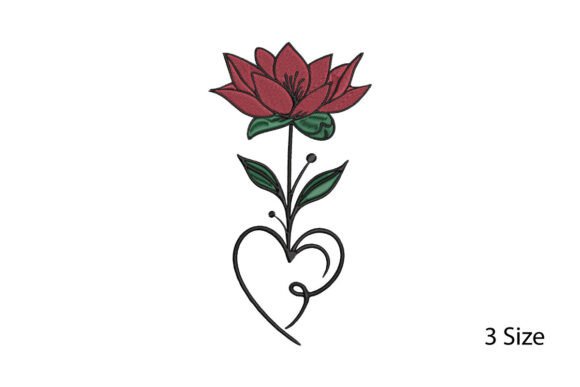
The initial impression of Love Rose Embroidery is one of understated elegance. While the description highlights it as a nice, stylish, and romantic way to decorate Valentine’s projects, the visual structure suggests a versatility that extends far beyond February 14th. The design avoids overly complex shading or excessive stitch density, which often leads to puckering on lighter fabrics. Instead, it offers a clean, classic aesthetic that can serve as a subtle brand accent for boutiques, bakeries, florists, and creative studios looking to add a touch of warmth to their merchandise.
Commercial Viability Beyond Valentine’s Day
Many business owners hesitate to use thematic designs year-round, fearing they will date their inventory. However, Love Rose Embroidery possesses a timeless quality. For a local café or a handmade soap brand, this rose motif can function as a sophisticated logo element rather than a holiday-specific graphic. When applied to staff uniforms or aprons, it conveys attention to detail and care—qualities customers associate with premium service.
I tested the concept of using this design for custom apparel and found it particularly effective as a chest logo accent. Unlike large back prints, a small, well-executed rose on the left chest area of a polo shirt or denim jacket creates an immediate sense of professionalism. It is small enough to be unobtrusive but detailed enough to be recognized from a conversational distance. This makes it an excellent choice for small business merch that employees actually want to wear, rather than hide in the back of the closet.
Application on Curved and Textured Surfaces
One of the biggest challenges in commercial embroidery is maintaining design integrity on difficult surfaces. I analyzed how Love Rose Embroidery would perform on caps and tote bags. Cap embroidery requires designs that are not too tall, to avoid hitting the brim, and not too wide, to prevent distortion on the curved front panel. This design’s compact nature makes it a strong candidate for cap embroidery, provided the digitizer has optimized the pull compensation.
For tote bag design, the rose works beautifully as a central focal point or a corner accent. Canvas and cotton blends, common in eco-friendly packaging, hold stitches well. However, business owners must consider the fabric texture. If the tote bag material is loosely woven, a backing stabilizer is non-negotiable to prevent the stitches from sinking into the weave. The romantic vibe of the rose pairs exceptionally well with natural fibers, reinforcing a brand’s commitment to organic or handmade values.
Technical Considerations for Production
Before running a production batch, any serious crafter or manufacturer must address technical specifics. The product description notes that this digital embroidery file comes with multiple formats, which is essential for compatibility with various machine brands. However, it does not specify exact stitch counts or recommended hoop sizes. This is a critical gap that requires due diligence.
I strongly advise checking the stitch count before purchasing. A high stitch count on a small design can lead to excessive thread breakage and longer production times, eating into profit margins. Conversely, a low stitch count might lack the definition needed for a professional look. Always request a sample stitch-out if possible. Additionally, confirm the commercial licensing terms. Just because a file is available for purchase does not automatically grant the right to sell items made with it. Ensure the license covers commercial embroidery and mass production if you plan to scale.
Another practical note is testing the design in black and white first. Color can sometimes mask poor digitizing or spacing issues. By stitching out the design in a single color thread on a contrasting fabric, you can clearly see if the outlines are smooth and if the fill areas are even. This step is crucial for maintaining brand identity consistency. If the rose looks jagged or uneven in monochrome, it will likely look amateurish in color, regardless of how vibrant the thread colors are.
Navigating Size and Detail Limitations
While Love Rose Embroidery is versatile, it is not suitable for every application. I would caution against using it for extremely small embroidered patch sizes, such as those under one inch in diameter. At that scale, the petals may merge, losing the distinct shape that gives the design its charm. Similarly, avoid placing it on items that undergo rigorous industrial washing, unless you use high-quality polyester threads and robust stabilizers. Frequent agitation can cause fine details to fray or distort over time.
For businesses creating printable mockup assets for Etsy listings or client approvals, ensure the digital representation matches the physical reality. Use high-resolution photos of actual stitch-outs rather than relying solely on software simulations. Customers buying handmade product items expect transparency. Showing a close-up of the texture and stitch direction builds trust and reduces return rates.
Elevating Brand Perception Through Detail
Ultimately, the decision to use Love Rose Embroidery should align with your brand’s narrative. For a florist, it is a literal representation of their trade. For a bakery, it suggests sweetness and care. For a pet brand, it adds a touch of softness to rugged dog collars or bandanas. The key is consistency. Use the same rose design across your design assets—from hang tags to aprons—to create a cohesive visual language.
In conclusion, Love Rose Embroidery is a capable and charming addition to a designer’s library. It transcends its Valentine S Day categorization to offer genuine utility for year-round branding. By respecting the technical limitations of embroidery machines and choosing the right fabrics and stabilizers, small business owners can leverage this design to create high-value, emotionally resonant merchandise. Always prioritize quality control, verify licensing, and test thoroughly. When executed with precision, this rose becomes more than just decoration; it becomes a symbol of your brand’s dedication to quality and beauty.